
Loft conversions · Derby & Derbyshire
Loft Conversions in Derby: Velux, Dormer & Hip-to-Gable
Turn the roof space into a bedroom, en-suite or office. Our own team handles the structure, stairs, fire safety, electrics, plumbing, plastering and joinery, under one project manager from survey to handover.

- 4.8 on Google
- £2m+ in projects delivered
- Insured to over £1,000,000
- Quotes within 2 working days

Loft conversion specialists covering Derby and Derbyshire
Converting the loft is often the simplest way to add a bedroom without giving up any garden. Much of the work is done from scaffolding and through the roof, so the rooms below stay in use until the new staircase is cut in. Derbyshire Specialists Group carries out every stage itself, from the new floor and steels to the en-suite, the built-in eaves storage and the decorating, so there is one team on site and one company responsible for the result.
Is your loft suitable?
- Head height Measure from the top of the ceiling joists to the underside of the ridge. Around 2.2 m is the usual starting point; less can mean lowering the ceiling below or changing the roof.
- Roof structure Older houses tend to have a traditional cut roof of rafters and purlins, which is simpler to open up. Modern trussed roofs need steels and a new structure first.
- Room for the stairs The new staircase has to land on the floor below without ruining a bedroom, and needs its own headroom.
- Pitch and footprint A steeper roof and a wider house give more floor at full height. Where the pitch is shallow, a dormer or hip-to-gable creates the headroom.
A converted loft can become:
- A main bedroom with an en-suite
- A guest room or teenager’s bedroom
- A quiet home office
- A playroom or hobby room
- A shower room to serve the top floor
- Built-in storage in the eaves
Types of loft conversion
-
Velux loft conversions
Rooflights fitted into the existing slope, with no change to the roof shape. The quickest and least expensive option where there’s already enough height.
Velux loft conversions -
Dormer loft conversions
A box-shaped addition off the rear slope gives vertical walls and full head height across more of the floor, often enough for a double bedroom and an en-suite.
Dormer loft conversions -
Hip-to-gable conversions
On a semi or detached house with a sloping side roof, the hip is built up into a vertical gable wall, making room for the stairs. Often paired with a rear dormer.
-
Mansard conversions
The rear slope is rebuilt almost vertical with windows set into it. It gives the most room of any loft conversion, but nearly always needs planning permission.
-
Bungalow loft conversions
A new first floor under the existing roof, adding bedrooms and a shower room without building outwards.
-
Loft boarding
Not ready to convert? Boarding raised above the insulation gives safe, usable storage in the meantime.
Loft boarding
Loft conversions in progress
From the bare frame to the finished dormer.
-

First fix: stud walls, insulation and rooflights in place -
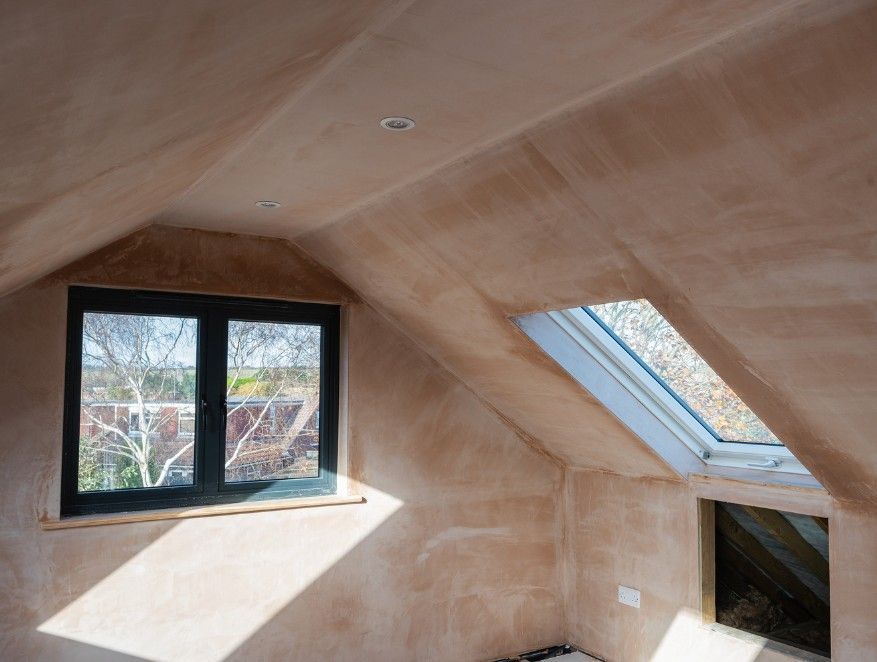
Plastered and drying out, ready for decoration -

A rear dormer finished in dark cladding
Which conversion, how long and what it costs
| Type | Planning | On site | Guide price |
|---|---|---|---|
| Velux | Usually permitted development | 4–6 weeks | From £27,500 |
| Dormer | Often permitted development at the rear | 6–8 weeks | £55,000–£85,000 |
| Hip-to-gable | Often permitted development | 8–10 weeks | Priced after survey |
| Mansard | Usually needs planning permission | 8–10 weeks or more | Priced after survey |
Prices are guides for a typical house, and the quote after the survey is itemised. Finance is available, subject to status, if you’d like to spread the cost.
Wondering if your loft will convert?
We’ll measure the head height, look at the roof and the stairs, and quote within two working days.
Planning permission for a loft conversion
Most loft conversions on houses are permitted development, so no planning application is needed, as long as they stay within these limits:
- No more than 40 cubic metres of extra roof space on a terraced house, or 50 on a semi or detached house, counting earlier roof extensions
- Nothing higher than the highest part of the existing roof
- No dormer on a front roof slope facing the road
- Dormers set back at least 20 cm from the eaves, in materials that look like the existing roof
- Side windows obscure-glazed and fixed shut, unless the opening part is over 1.7 m above the floor
- No balconies, verandas or raised platforms, and rooflights no more than 15 cm proud of the slope
Flats and maisonettes don’t have these rights. Dormers and other roof extensions aren’t permitted development in conservation areas or National Parks, which includes the parts of Derbyshire inside the Peak District, although rooflights often still are. Listed buildings need listed building consent. A lawful development certificate confirms your conversion is permitted development, and is worth having when you sell.
Building regulations for a loft conversion
- Structure New floor joists sized for a room rather than storage, and steel beams wherever the roof or walls need support.
- Fire escape A protected route down the existing stairs to an outside door, usually with fire-resisting doors on the rooms off the staircase, and mains-powered smoke alarms linked on every floor.
- Stairs A fixed staircase with the right pitch, headroom and handrails. A loft ladder isn’t enough for a room you’ll use every day.
- Insulation The roof slopes, dormer walls and cheeks insulated to current standards, so the new room stays warm in winter and doesn’t overheat in summer.
In a semi or terrace, steels often bear on the party wall, so the Party Wall etc. Act 1996 applies and notice goes to the neighbours. Bats are protected, so if there are signs of them in the roof, a bat survey is needed before work starts.
What to expect while we work
Scaffolding goes up first, and on dormer and hip-to-gable jobs most of the roof work happens from outside, so the house below carries on as normal. The disruptive stage is breaking through for the new staircase. It creates dust, so we tell you beforehand, keep doors shut and cover furniture near the opening. Power and water are only turned off when they have to be, on days agreed with you, and you get regular updates against the programme.
Loft conversion questions
How long does a loft conversion take?
As a guide, a Velux conversion takes 4 to 6 weeks, a dormer 6 to 8 weeks, and a hip-to-gable or mansard conversion 8 to 10 weeks or longer. We give you a programme before work starts and keep you updated against it.
Do I need planning permission for a loft conversion?
Most loft conversions on houses don't, provided they stay within the permitted development limits on volume, height and position. Mansards, front dormers, flats, listed buildings and roof extensions in conservation areas or National Parks need an application. We'll tell you which applies at the survey.
Does a loft conversion need building regulations approval?
Yes. Turning a loft into a room you sleep or work in always needs approval. Building control checks the new floor and steels, the fire escape route, the staircase, the insulation and the electrics, then issues a completion certificate.
Where will the new staircase go?
Usually above the existing stairs, using part of the landing or a box room. Building regulations allow reduced headroom over a loft stair, 1.9 m at the centre and 1.8 m at the side, which helps it fit. We'll show you the options at the survey.
Can a loft with a trussed roof be converted?
Yes, but the trusses have to be replaced with a new structure, usually steel beams and new rafters, designed by a structural engineer and approved by building control. It adds cost, so we check the roof before quoting.
Areas we cover
Loft conversions across Derby and Derbyshire
We convert lofts in Derby and the towns and villages around it.
Thinking about converting your loft? Call 01332 215256 or request a quote, and we’ll arrange a survey to see what your roof space can become.
